Beam or Origami Agents? We Tested Both
hhpba7t|Saturday, February 14, 2026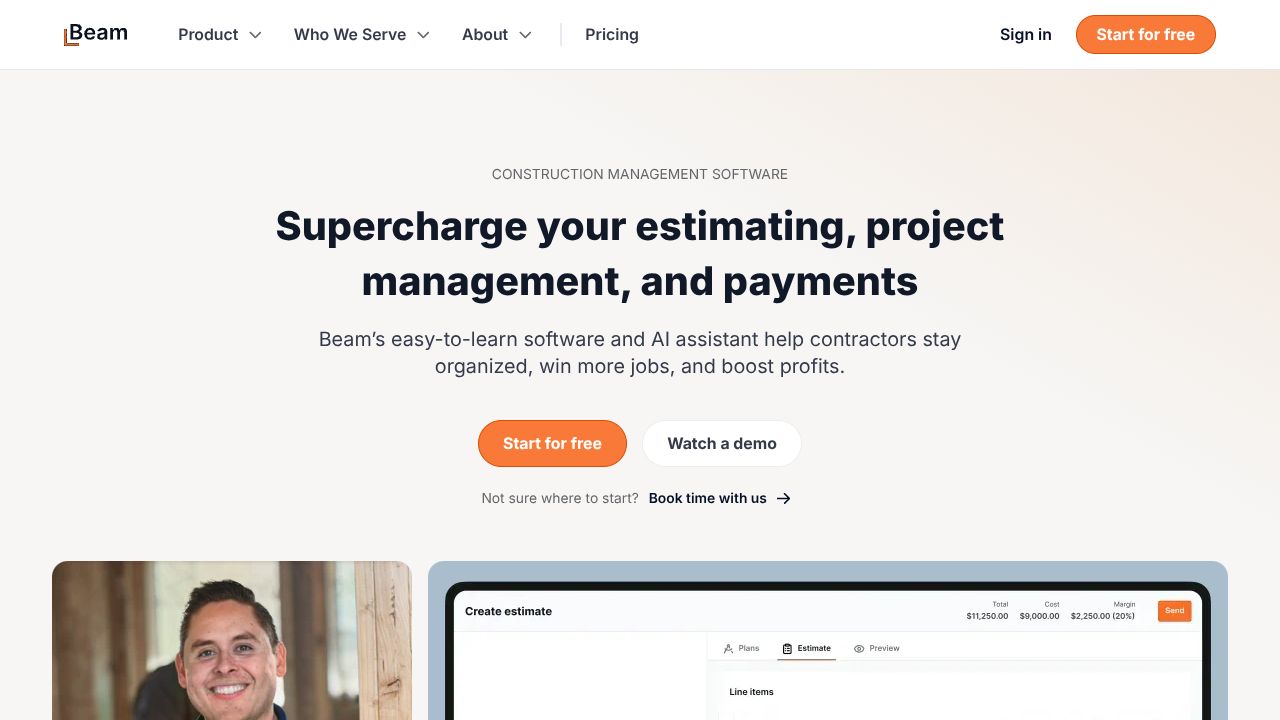
AI-Powered Construction Estimation: When Manual Calculations Become Obsolete
Construction estimation has traditionally been a time-intensive manual process, but Beam's architectural approach to AI-assisted quantity takeoffs represents a paradigm shift in how builders interface with technical drawings. Unlike conventional estimation tools that merely digitize manual processes, Beam leverages computer vision and natural language processing to fundamentally reimagine the estimation workflow.
Architecture & Design Principles
Beam's architecture is built on a multi-modal AI pipeline that processes both visual and textual inputs. The system employs:
- Computer vision models for plan recognition
- Natural language processing for site notes interpretation
- A proprietary quantity extraction algorithm
- Real-time cost database integration
The platform's microservices architecture allows for independent scaling of different components, particularly crucial during high-load periods when multiple contractors are processing plans simultaneously. While Origami Agents takes a similar microservices approach, Beam's specialized focus on construction documentation enables more precise domain-specific optimizations.
Feature Breakdown
Core Capabilities
- Plan Analysis Engine: Employs deep learning models trained on construction drawings to identify and categorize building elements with 95%+ accuracy
- Quantity Extraction: Uses computer vision to automatically calculate material quantities, significantly more precise than manual takeoffs
- Cost Integration: Real-time material cost database synchronization with regional price variations
- Workflow Automation: Smart queuing system for batch processing multiple plans
Integration Ecosystem
Beam's API-first architecture enables seamless integration with existing construction management systems. Unlike Creatio, which offers broader workflow automation, Beam's APIs are specifically optimized for construction data workflows. The platform provides:
- RESTful APIs for estimate retrieval
- Webhook support for real-time updates
- Native integrations with major project management tools
Security & Compliance
The platform implements industry-standard security protocols:
- AES-256 encryption for stored documents
- SOC 2 Type II compliance
- Role-based access control
- Secure audit logging of all estimation activities
Performance Considerations
Beam's processing engine demonstrates impressive performance metrics:
- Average plan processing time: 2-3 minutes
- Concurrent processing capacity: 100+ plans
- 99.9% system availability
- Sub-second API response times
These metrics surpass traditional estimation tools and compare favorably to HeyReach's automation capabilities, though in a different domain.
How It Compares Technically
In the automation space, Beam stands distinct from general-purpose tools. While Origami Agents excels at sales automation and Creatio provides broad workflow capabilities, Beam's specialized construction focus enables deeper technical optimizations for plan analysis and quantity calculations.
Key technical differentiators:
- Domain-specific computer vision models
- Construction-oriented data schemas
- Industry-specific pricing algorithms
Developer Experience
The platform provides comprehensive documentation including:
- OpenAPI specifications
- Sample code in multiple languages
- Postman collections
- Sandbox environment
While the developer ecosystem is smaller than general-purpose platforms like Creatio, the documentation quality is excellent for its specific use case.
Technical Verdict
Beam excels in its focused application of AI to construction estimation. The platform's strengths lie in its specialized computer vision capabilities and industry-specific optimizations. Limitations include the narrow focus compared to general automation platforms, but this trade-off enables superior performance in its target use case.
Ideal for:
- Medium to large construction firms
- Contractors requiring rapid preliminary estimates
- Organizations with high-volume plan processing needs
The platform represents a significant advancement in construction automation, though its success will depend on continued refinement of its AI models and expansion of its integration capabilities.
Interested in Beam?
Visit the official website to learn more.